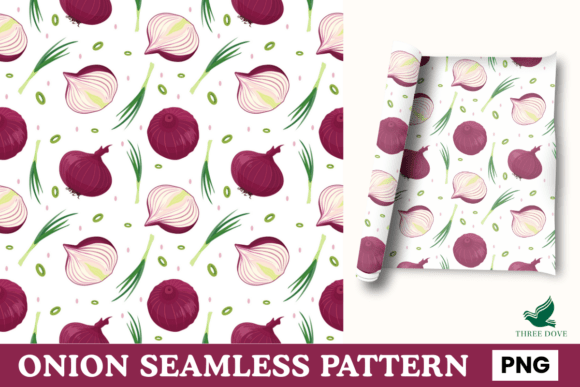
Unlocking Creative Potential with the Onion Seamless Pattern
There is a distinct satisfaction in finding the perfect texture to elevate a handmade project from "good" to "professional." Whether you are designing wedding invitations, wrapping a thoughtful gift, or creating digital assets for your small business, the foundation of your design often dictates the final quality. This is where the Onion Seamless Pattern becomes an invaluable resource. Unlike generic backgrounds that can look flat or repetitive, this specific botanical motif offers organic depth and visual interest that resonates with modern aesthetic trends. However, diving into digital paper downloads requires more than just a quick click; it demands an understanding of file specifications, usage rights, and technical compatibility to ensure your creative vision translates perfectly into reality.
The appeal of the onion motif lies in its versatility. It bridges the gap between rustic charm and sophisticated minimalism. For scrapbookers and cardmakers, it provides a neutral yet textured backdrop that allows photos and handwritten notes to pop without competing for attention. For entrepreneurs selling handmade stationery or packaging, it adds a layer of perceived value that customers instinctively recognize as high-quality. Yet, many creators overlook critical details when purchasing digital assets like this, leading to frustration down the line. By understanding what to look for and how to avoid common pitfalls, you can maximize the utility of your DIGITAL DOWNLOAD ONLY Onion Seamless Pattern and ensure every project meets your standards.
Understanding Resolution and Print Quality
One of the most frequent misunderstandings in the world of digital crafting involves resolution. Many beginners assume that if an image looks clear on their computer screen, it will print beautifully. This is rarely the case. Screen displays typically operate at 72 DPI (dots per inch), whereas professional printing requires a minimum of 300 DPI. If you attempt to print a low-resolution file for a physical product like a place card or gift wrap, the result will be pixelated, blurry, and unprofessional.
When evaluating a purchase, always verify the technical specifications before committing. A premium offering, such as the one described here, should explicitly state that it includes a 300 DPI high resolution PNG Image. Furthermore, the dimensions matter immensely. A pattern sized at 5000 x 5000 pixels provides ample room for scaling. You can shrink it for a small tag or expand it to cover a large sheet of packaging material without losing clarity. Ignoring these metrics can cost you time and money, forcing you to reprint materials or abandon a project entirely. Always check that your download includes files large enough to handle your intended output size.
The Critical Difference Between Digital and Physical Goods
A surprisingly common source of confusion arises from the nature of the transaction itself. In an era of same-day shipping and instant gratification, some consumers mistakenly expect a physical package to arrive after purchasing a digital file. It is vital to read the product description carefully: This product is a digital download only, no physical items will be sent to you.
Failing to recognize this distinction can lead to unnecessary anxiety when a tracking number doesn't appear immediately. The value you are receiving is the intellectual property and the high-quality file itself, delivered instantly via a .zip archive. To avoid disappointment, ensure you have a plan for accessing and storing your files. Once downloaded, you should unzip the folder immediately and back up the Premium Seamless Digital Paper Patterns to a cloud service or external drive. This ensures that even if your computer fails, your library of creative assets remains safe and accessible for future projects.
Color Accuracy and Monitor Calibration
Visual consistency is another area where expectations often clash with reality. You might fall in love with the warm, earthy tones of the onion pattern on your laptop, only to find that the printed version looks slightly cooler or more muted. This discrepancy occurs because monitors vary wildly in how they display color. What you see is heavily influenced by your screen's brightness, contrast, and calibration settings.
The standard disclaimer—Colors may slightly vary due to your monitors settings—is not just legal jargon; it is a practical warning. Professional designers anticipate this variance. If color matching is critical for your brand identity, such as when creating packaging that must match a specific logo, do not rely solely on the screen preview. If possible, order a test print or use a calibrated monitor. For most hobbyists and small business owners, understanding that slight variations are normal prevents unnecessary dissatisfaction. Embrace the organic nature of the medium; often, these subtle shifts add to the handmade charm of the final product rather than detracting from it.
Software Compatibility and File Formats
Before finalizing your purchase, you must verify your software will be compatible with these files. The industry standard for high-quality textures is the PNG format, which supports transparency and lossless compression. While most modern design programs like Adobe Photoshop, Illustrator, Canva, and Procreate handle PNGs effortlessly, older or highly specialized software might struggle. Additionally, the file is delivered in a .zip archive. If you are working on a mobile device or a tablet, ensure you have an app capable of extracting zip files before you begin.
Attempting to force incompatible files into a workflow can corrupt your project or degrade the image quality. For instance, saving a high-res PNG as a JPEG repeatedly can introduce compression artifacts, ruining the crisp lines of the onion illustration. Treat your digital papers as raw ingredients; handle them with care. Open the original high-resolution file in your editor, make your adjustments, and then export your final design in the format best suited for your specific output method, whether that is web sharing or professional offset printing.
Maximizing Versatility Across Projects
The true power of a seamless pattern lies in its adaptability. A single Onion Seamless Pattern file can serve dozens of purposes if utilized creatively. Do not limit your thinking to just one application. Consider using the texture as a background for digital invitations, then repurposing cropped sections for social media graphics to maintain brand consistency. Use it to line the inside of gift boxes, create custom tags, or even decoupage onto handmade journals.
However, a mistake many make is failing to plan the repeat. Because the pattern is seamless, it tiles infinitely without visible edges. When laying out a design for a large format like wrapping paper, ensure your composition accounts for the repeat interval so that key elements aren't awkwardly cut off at the seams. Experiment with opacity and blending modes in your software. Lowering the opacity can turn a bold pattern into a subtle watermark, while overlay modes can integrate the texture with solid colors to create entirely new hues. This level of manipulation turns a simple download into a comprehensive design toolkit.
Making an Informed Decision
Ultimately, investing in high-quality digital resources is about efficiency and professionalism. By choosing a file that offers 1 x Seamless Pattern at 5000 x 5000 resolution, you are securing a versatile asset that grows with your skills. Avoid the trap of settling for low-quality freebies that limit your output. Instead, prioritize sources that provide clear specifications, high-resolution assets, and transparent usage terms. Take a moment to review your current software setup and understand your printing needs. With the right preparation and a keen eye for detail, the Onion Seamless Pattern can become a staple in your creative arsenal, helping you produce work that stands out in a crowded market.